Maximizing engine life for mining operations through long-term partnership and smart optimization
Originally published in Global Mining Review’s November 2025 issue

It is clear why long-term equipment stability is so highly valued within the mining sector. Operators need machines that return value on investment, can operate reliably for a long time in harsh conditions and experience as limited amount of unexpected downtime as possible.
The engine is critical to overall equipment performance, which is why Cummins takes the long view when it comes to their support model for miners, combining a century of engineering expertise with their extensive service network to deliver powerful performance throughout the entire engine lifecycle.
How this plays out in the field can be seen in several ways.
Extending engine life through data and collaboration
Extending the operational life of engines is one of the most effective ways to improve productivity and reduce costs. Put simply, a long-lasting engine benefits miners in one of two ways – either through fewer rebuilds within the total machine life, or by extending the length of total life. Cummins achieves this by collecting real-world data and applying engineering insights to optimize engine performance and reduce wear.
The QSK60 engine used in large mining excavators is a prime example of this approach. Originally rated for 12,000 hours under typical load conditions, Cummins extended its life to overhaul to 18,000+ hours through a combination of rigorous durability testing, component optimization, and refined maintenance practices. These improvements are based on collaborative customer projects that allow engineers to further optimize for the challenges of specific mining environments.
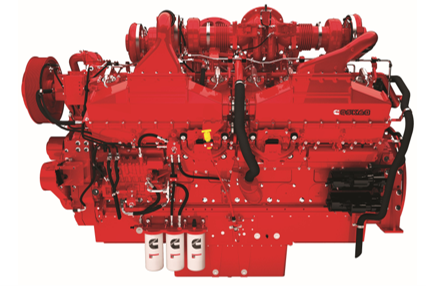
Having fewer rebuilds due to extended engine life also means having less downtime and lower total operational cost, providing greater value to mining operators. This approach demonstrates that combining engineering expertise with field insights can unlock substantial benefits over the engine’s operational lifetime.
To keep fleets performing as expected, miners require real-time visibility into in-field equipment operating conditions. Modern connected systems enhance this visibility, delivering real-time insights.
PrevenTech® Remote Monitoring
Cummins’ PrevenTech is a smart, integrated engine reliability and performance solution that combines real-time data monitoring, advanced predictive analytics and 24/7 expert support to ensure Cummins engines operate at peak performance. Connected engines transmit alerts for urgent or potential issues, along with recommended maintenance actions based on real-world usage.
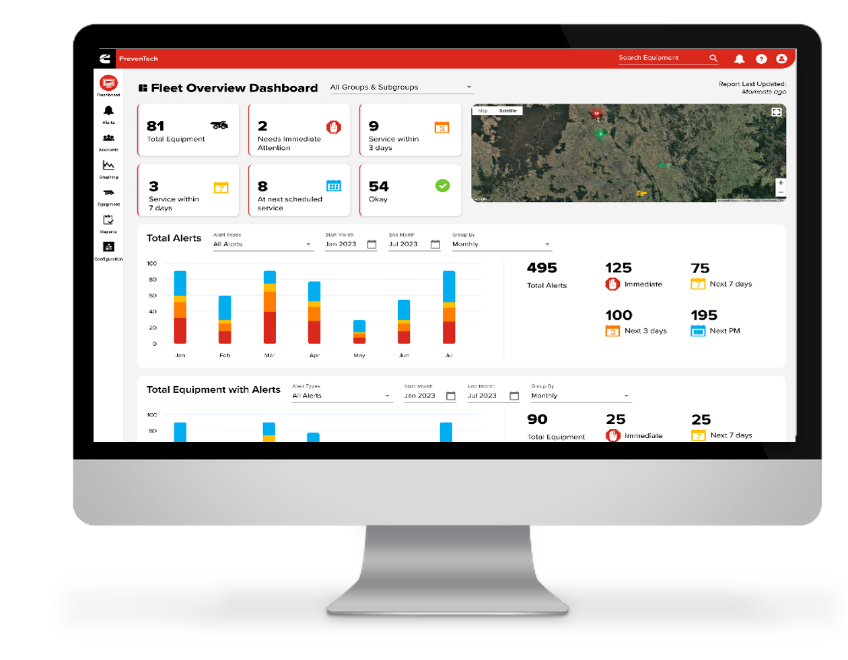
PrevenTech enables operators to:
- Optimize maintenance intervals for each site, using data insights to hone performance
- Track component wear to identify what servicing is required for maintenance, maximizing uptime
- Monitor engine health remotely to predict maintenance requirements ahead of potential engine failures
- Proactively plan downtime and repairs to minimize disruption
Even with the best preventative measures, engines require routine maintenance. Repair and maintenance needs — especially when unexpected — can be difficult to manage, a challenge made easier through accessible support.
Global Coverage and PowerCare™ Cost Per Hour (CpH)
Cummins supports engine longevity and reliability not only through product design and advanced analytics, but also through its extensive global service network, spanning 190+ countries across six continents through 600+ distributor locations, 3,700+ certified high-horsepower technicians and 17 high-horsepower master rebuild centers.
Part of Cummins’ commitment to offering service programs and options that fit every mine site’s needs includes its customizable PowerCare™ Cost Per Hour (CpH) contracts, which provide predictable maintenance costs, covering parts, labor, and scheduled or unscheduled maintenance over the engine lifecycle. Customers using CpH and Cummins’ global service network can achieve over 97% engine availability.
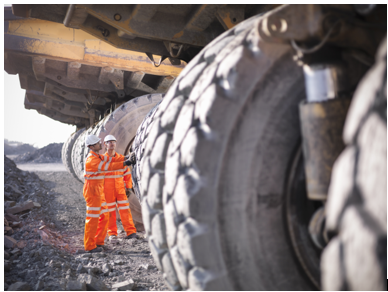
By forecasting maintenance costs related to repairs, mid-life and rebuilds, miners can operate with reduced operational risk.
With or without CpH contracts, Cummins maintains a robust inventory of “swing,” or replacement, engines to keep mine sites up and running while service is under way.
Expert Rebuilds
Part of the beauty of Cummins engines is that they’re built to withstand 3+ rebuild cycles. When rebuilds are required, it’s important to invest strategically to return the best long-term value possible.
Cummins’ global network of 17 high-horsepower Master Rebuild Centres (MRCs) extend the life of high-horsepower engines, including long-time favorites like the QSK38, QSK50, and QSK60 and more. Through a six-stage process, engines are disassembled, cleaned, inspected, re-machined, re-built with genuine Cummins parts, and tested to meet or exceed factory standards, as rebuilt units include a rebuild warranty included on rebuilt units.
Rebuilds provide a cost-effective option to enhance operational efficiency, reduce environmental impacts and maximize the value of existing assets without the expense or downtime of replacing engines. While rebuilds take an average of 35 hours, they occur while the machine resumes operation with a Cummins-provided “swing” engine. Cummins’ HHP MRCs also support Cummins’ sustainability goals by using 85 percent less raw materials than new engine production, reusing water and minimizing scrap.

Approaching a rebuild also provides the opportunity to consider new ways to tailor equipment to mine profiles and generate greater efficiency.
HPI to MCRS Upgrades
Many operators are upgrading their QSK60 and QSK78 engines from older HPI fuel systems to Cummins’ Modular Common Rail Fuel System (MCRS). For convenience, this upgrade is performed during the engine rebuild process at Cummins High-Horsepower MRCs.
The MCRS system provides a range of benefits:
- Fuel savings of 3–5% through precise high-pressure injection
- Particulate emissions up to 63% lower compared to previous HPI systems
- Extended engine life by up to 10% to overhaul
- Smoother operation and faster cold starts
- Lower total cost of ownership
Precise fuel delivery reduces stress on engine components, improving efficiency and reliability. Operators also benefit from predictable performance improvements, with the extent of results varying depending on mine profile, equipment use, and operating conditions.
Custom engine calibrations
Cummins site-specific calibration upgrades for engines in the QSK38 to QSK95 range optimize combustion and fuel delivery for specific duty cycles. By measuring factors like site profile, average loads, tire pressures, operating temperatures and driver behaviors, Cummins can build a holistic data set and make calibrations that reduce engine fuel consumption and CO₂ emissions by 2–5% without compromising reliability or productivity.
For operators, these upgrades can deliver measurable fuel savings while maintaining familiar engine performance, providing an immediate impact on operational costs and environmental goals. For those wanting to go further, hybrid options provide a future solution.
Hybrid Electric Vehicles (HEVs)
Hybrid retrofit programs combine internal combustion engines with battery-electric systems, providing flexible energy management across mining haul routes. Hybridization presents significant opportunity for the mining industry’s effort to achieve an energy transition, leveraging the large installed asset base.
Hybrid systems allow operators to:
- Capture energy through regenerative braking
- Use battery power during low-demand periods
- Reduce fuel consumption and CO₂ emissions by 15–30%, depending on mine profile
Reduced engine loads also lower maintenance frequency and could extend engine life. Cummins’ first-fit hybrid pilot program launched in 2024, and the acquisition of First Mode assets in 2025, expanded hybrid retrofit capabilities at scale. Early deployments include Komatsu 930E-4 trucks in Chile, with additional pilots planned across North and Latin America.
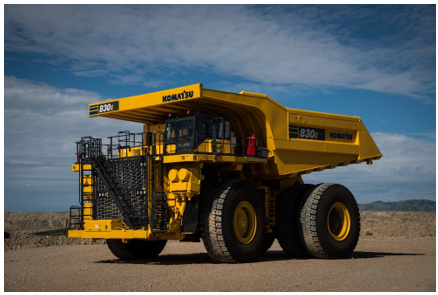
Hybrid systems provide reliability and operational familiarity for operators while delivering fuel and emissions savings, demonstrating a practical pathway for incremental decarbonization without the need for full electrification.
Dual-fuel ethanol/diesel systems
Cummins is also furthering the “clean fuels” decarbonization pathway, which will also be available through retrofits for existing fleets. Cummins, in partnership with Vale and Komatsu, is developing dual-fuel systems that allow haul trucks to operate on a combination of ethanol and diesel. Modified trucks can run on up to 70% ethanol, potentially reducing CO₂ emissions by up to 50%.
Engine testing continues through 2026, followed by field validation. Dual-fuel systems leverage existing infrastructure and fleets without major modifications, making them a cost-effective option for operators seeking significant emissions reductions.
Drop-in fuel integration
As part of efforts to support the decarbonization of mining today, Cummins engines already support the use of drop-in fuels such as hydrotreated vegetable oil (HVO) and biodiesel blends. These fuels can be used with existing engines and infrastructure, avoiding high capital expense associated with alternate solutions while advancing decarbonization goals.
For example, hybrid engines running with 55% HVO can achieve up to a 50% CO₂ reduction from well-to-wheel. Drop-in fuel integration allows operators to reduce their environmental impact without major modifications to fleet or facilities, enabling significant emissions saving without high costs and integration timings.
A balanced path forward
Internal combustion engines remain the foundation of powering mining, given fleet requirements, current infrastructure limitations, and remote operating locations.
Miners can protect their investment in these high-horsepower power solutions through strategic partnership for long-term aftermarket support and technology upgrades through the life of these engines.
By combining proven engine technology with emerging solutions, Cummins maximizes engine life and operational reliability, while also providing a practical pathway to emissions reduction.
Author Profiles