
The first 100 years of Cummins Mining

1926
As diesel becomes an alternative to steam, Northwest Engineering begins using a 4-cylinder Cummins Model F engine in its power shovel excavator. This is the first use of a Cummins engine for excavation, initiating a history of innovation for harsh environments.

1928
Applying lessons learned from the power shovel, Cummins introduces what may be the world’s first wholly enclosed diesel engine. The Model U features vertical valves and a more dependable fuel pump, making it more suitable for dusty and dirty conditions.

1929
Cummins begins production of the Model K, an “upsized” Model U capable of delivering up to 210 horsepower. The engine and its descendants — the KO, L and LR — will go on to serve industrial markets for the next four decades.

1932
With the launch of the H672, Cummins achieves its first major success with a heavy-duty diesel engine. The Model H will dominate the U.S. trucking industry for the next 70 years and be adapted for mining and other industrial uses.

1947
The “New H” series upgrades the Model H and quickly goes on to establish reputations for durability and serviceability. Descendants of the NH Series will include electronically controlled engines like the N14, which will carry its architecture into the 1990s.

1949
The first NVH Series units combined two NH engines to deliver 400 to 600 horsepower at up to 2,100 rpm. NVH is part of Cummins’ expansion into very large displacement engines for mining and other industrial applications and will endure through the 70s.

1952
The new PT (Pressure-Time) Fuel System revolutionizes diesel fuel systems by eliminating timing adjustments and many bulky components. It becomes a hallmark of Cummins mining engines for its ability to maintain stable power and cooling under heavy loads.

1954
In a major technological advancement, Cummins begins offering turbocharged versions of its 12-cylinder V engine (the VT-12), as well as its 6-cylinder NTs, NRTs and JTs.

1956
Cummins begins building its first international manufacturing plant in Shotts, Lanarkshire, Scotland. The first unit built at Shotts is a 335-horsepower Model H, which is shipped to Euclid for use in mining equipment.

1959
By the end of the 1950s, Cummins is regularly exporting mining engines and other equipment to 121 countries.

1960
Many exclusive dust protection features designed to extend the life of mining and construction engines become standard equipment in the 1960s.

1961
Cummins signs a 15-year license agreement with Komatsu Manufacturing Company, Ltd., marking Cummins’ entry into East Asia. Much of Komatsu’s growth coincides with Japan’s post-war reconstruction effort.
1966
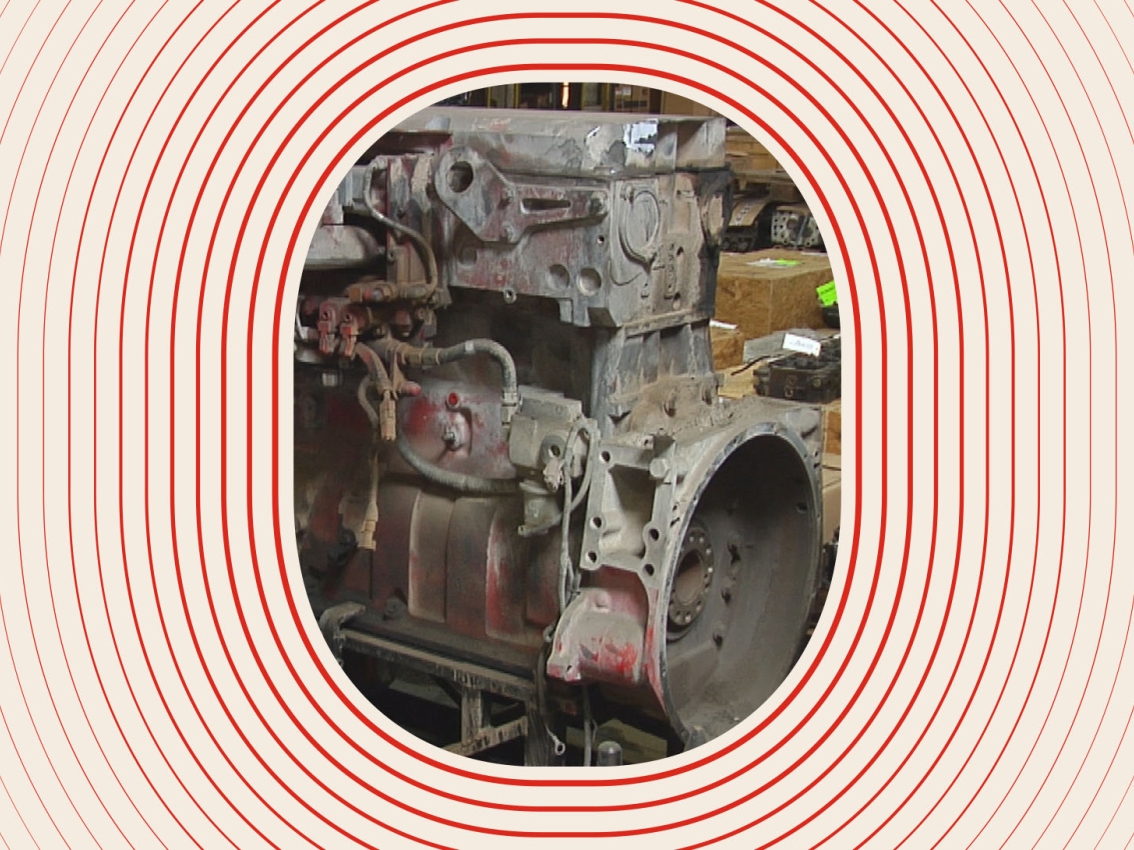
With the founding of the Recon facility in Memphis, Tennessee (USA), Cummins begins making remanufacturing history. Mining operations can now turn to Cummins for the reconditioning of existing diesel engines and other components by a factory-trained team.

1967
Situated on 24 acres, the sprawling $22 million Cummins Technical Center demonstrates the company’s dual focus on research and innovation. The facility’s impressive proportions mirror the sizable contributions it will make in years to come.

1969
By the end of the 1960s, Cummins’ power range expands to 700 horsepower thanks in part to the “Big Displacement Concept, which provides more power, longer life, greater reliability and better fuel economy.

1973
To bring the emerging trend of turbocharging in-house and expand its business, Cummins purchases Holset, a world-class producer of turbomachinery based in England. The company later evolves to become the Cummins Turbo Technologies business unit.

1973
Cummins boosts its presence in the international mining sector with a new manufacturing facility at Daventry in the English Midlands. The first engine produced by 26 operators is a K38 engine supplied to Komatsu for a mine truck application.

1974
The first K Series engines begin the transformation of the high-speed diesel market for mining. The new engines overcome the previous limitations of diesel power, helping to establish Cummins as a mining industry standard.

1975
Mining trucks equipped with Cummins high-horsepower diesel engines are first used in Chinese iron mines, starting a legendary long-term partnership with the country. Cummins is one of the first American companies to pursue business in China.

1979
Cummins and Hitachi Construction Machinery launched their mining partnership with the UH801 Ultra-large Hydraulic Excavator — one of the largest models at the time — powered by a Cummins KT19C engine and delivered to North America.

1985
Anticipating changes that won’t be fully realized until the 1990s, Cummins invests heavily in electronics, intensifying the company’s movement from mechanical to electronically controlled engines that will later deliver significant benefits to miners.

1987
Cummins makes an all-out commitment to new technologies for reducing nitrogen oxides (NOx) and particulate matter in its engine emissions, years ahead of regulation deadlines. These efforts will lead to significantly improved K, NH and V903 models.

1990
Cummins releases CELECT, its first full-authority electronic control system produced by Cummins. Setting the stage for all future controls, the system delivers compliance a full year in advance of 1991 U.S. EPA emissions standards.

1992
The CENTRY system is released as the first intelligent electronic engine control system designed by Cummins for heavy-duty and off-highway applications like mining, construction and agriculture.

1992
Cummins continues its development of leading-edge diesel electronics with the launch of the K2000E and K1800E, along with upgrade kits for existing engines at the top of the K Series family.

1995
Capable of remotely observing and diagnosing engines already in operation, CENSE Electronics is one of the first systems to continually monitor and record critical engine functions, tracking safety trends and accurately predicting service issues.
1995
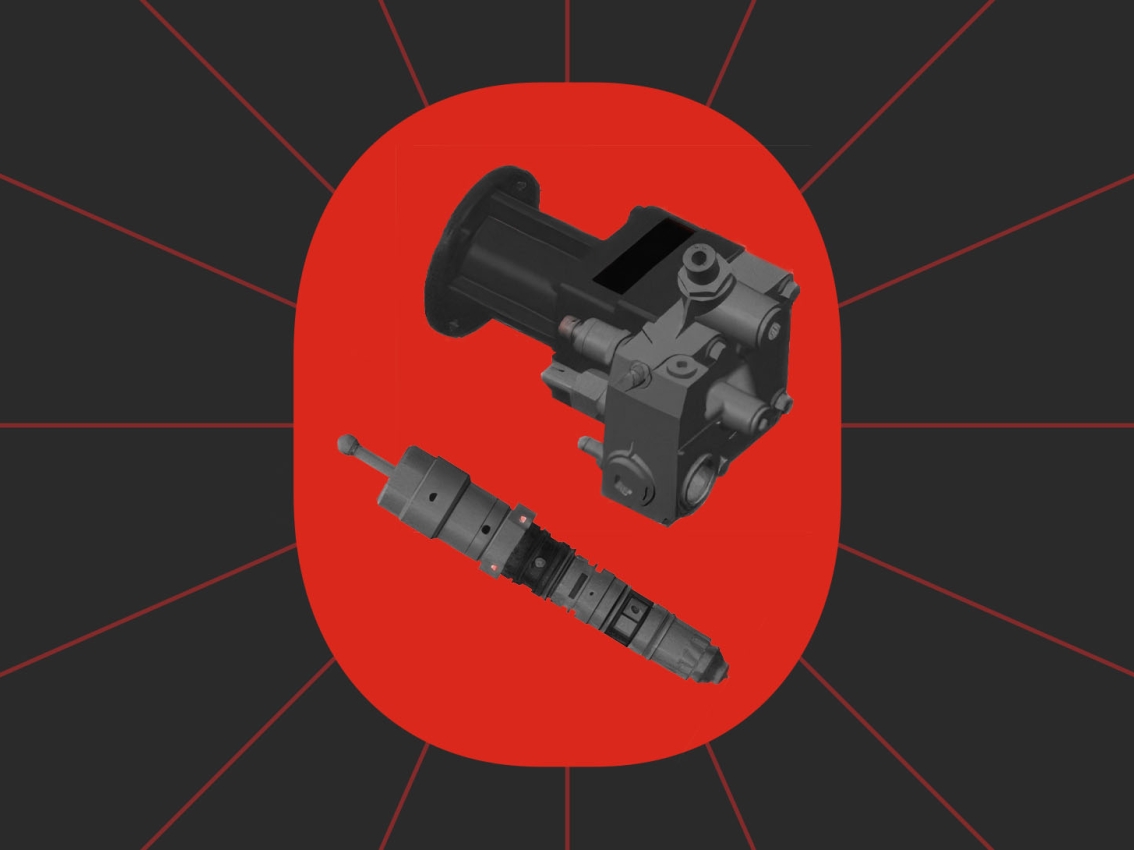
Designed for higher injection pressures, the HPI (high-pressure injection) fuel system improves combustion control compared to PT systems. It features electronic actuators for timing and metering, delivering better precision and emissions control.
1996
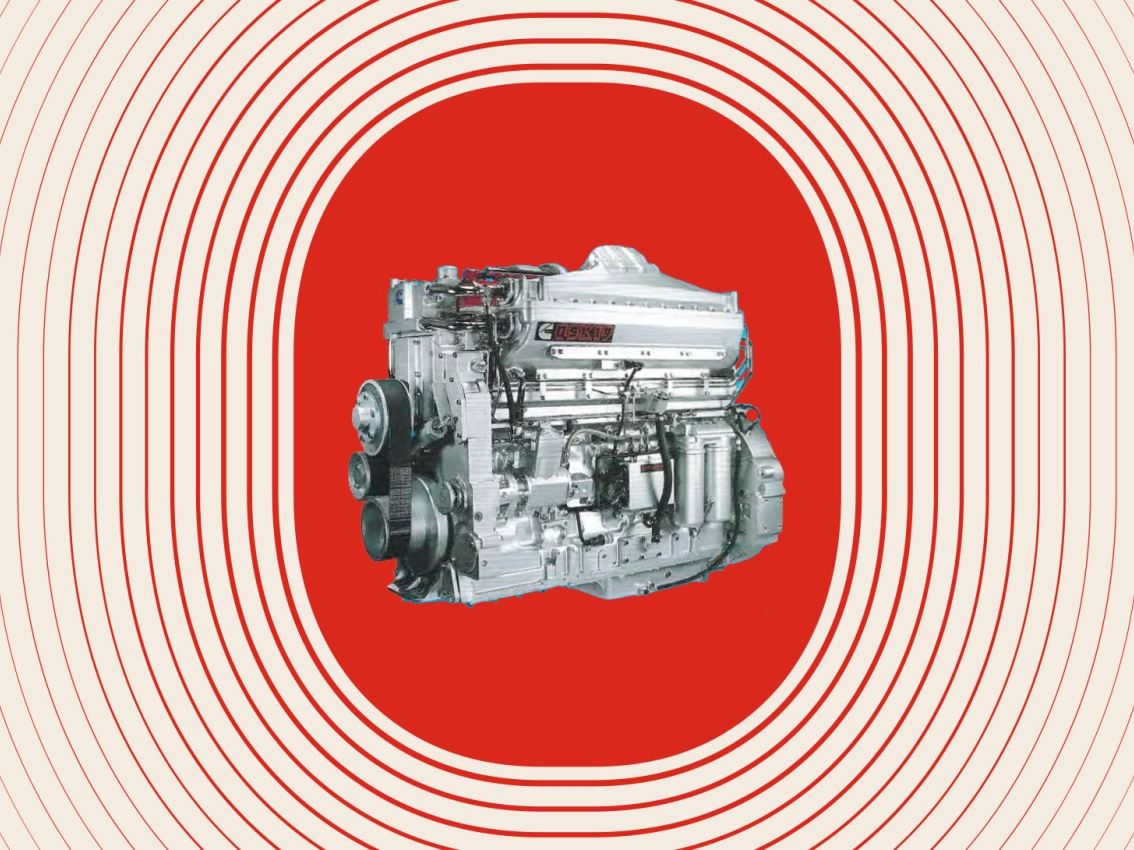
Cummins introduces the QSK19, the first engine in the Quantum series, a family of electronically controlled engines that sets new benchmarks for the lowest cost of operation for mine engines. It is soon followed by the QST30, QSK45 and QSK60.

1997
Cummins collaborates with Alfa Laval to develop the Eliminator, a breakthrough in oil filtration technology for high-horsepower engines used in demanding applications like mining, marine and rail, overcoming the limitations of traditional spin-on oil filters.

2000
Cummins unveils the QSK78, designed in conjunction with Komatsu and built at the Cummins plant in Daventry, England. It’s the largest, most powerful and environmentally friendly mining engine available in the world at that time.

2000
Cummins unveils MiningGateway.com, an interactive internet portal that provides mining customers the information they need to get the lowest operating costs from their Cummins-powered haul trucks, excavators and drills.

2006
Cummins first installs selective catalytic reduction (SCR) aftertreatment technology on midrange engines certified to Euro IV standards for commercial vehicle applications in Europe. SCR becomes standard for Tier 4 HHP surface mining applications after 2015.
2008
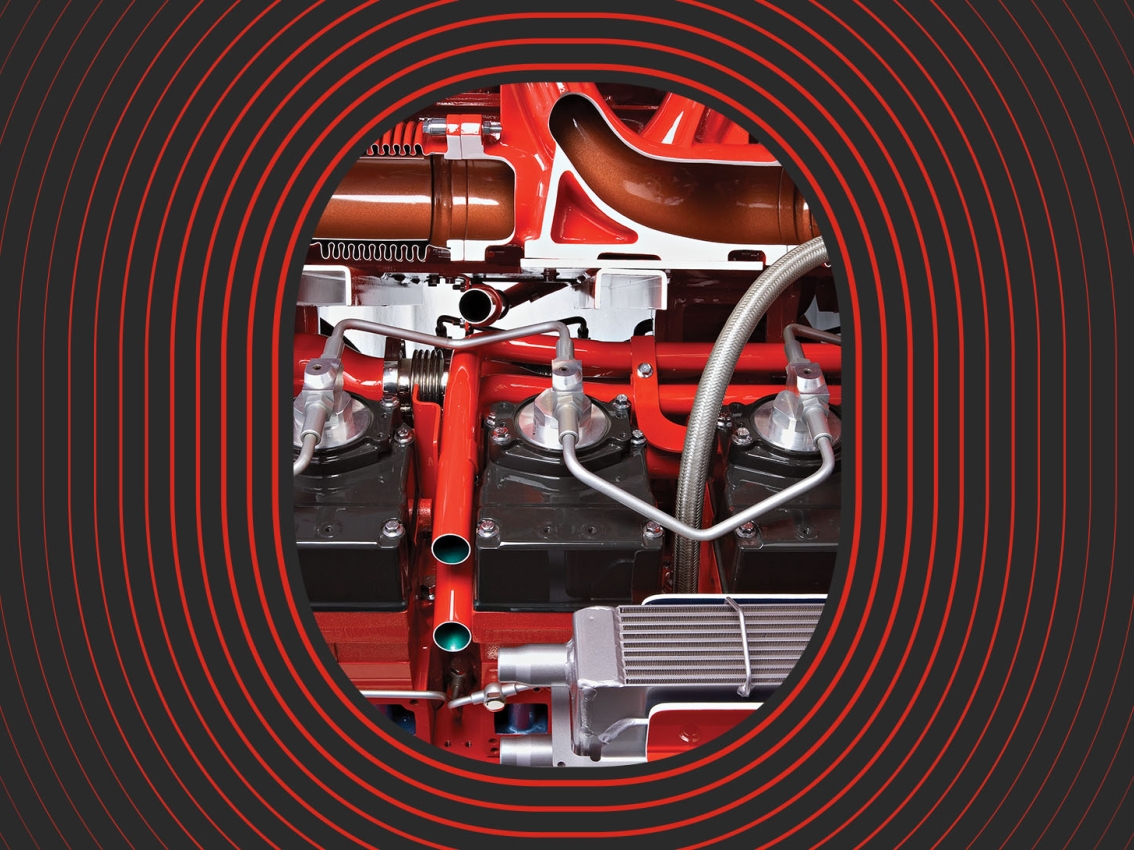
The modular common-rail fuel system (MCRS) becomes the new standard for Cummins high-horsepower mining engines. Higher injection pressure and larger accumulator volume enable better fuel economy, longer engine life and other improvements over older systems.

2014
Cummins begins launching Tier 4 Final (T4F) solutions for high-horsepower mining engines, meeting near-zero emissions requirements. Engines above 751 horsepower (560 kW) adopt SCR for durability and uptime in harsh mining conditions.

2019
PrevenTech for Mining launches as a new digital monitoring and reporting solution that provides advanced detection of potential equipment health issues.

2022
Capable of producing up to 4,400 horsepower at 1,800 rpm, the QSK95 transforms performance for remote mining operations with high output, low emissions and 16-cylinder capability. Today, it remains the largest and most powerful mining engine ever built.

2023
Cummins announces approval of its entire line of diesel high-horsepower engines across all ratings for use with unblended paraffinic fuels (EN15940), often referred to as renewable diesel, including hydrotreated vegetable oil (HVO).
2024
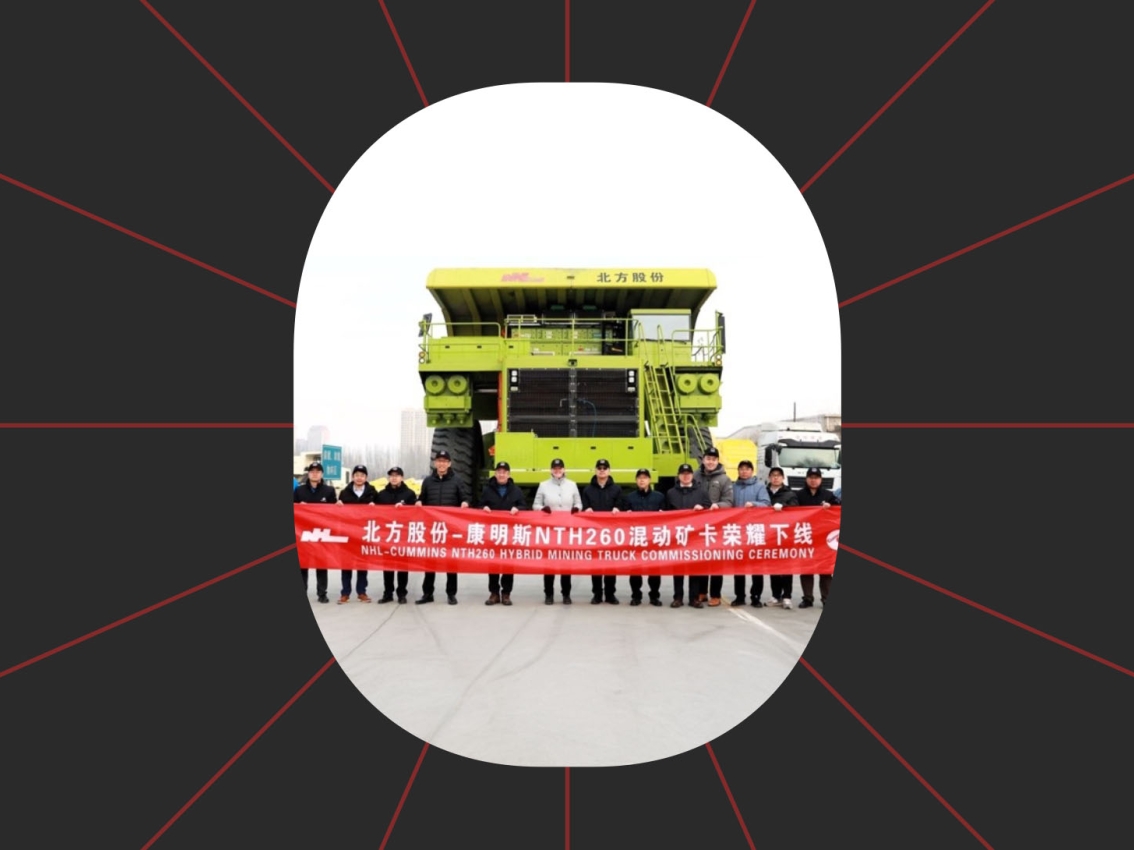
Cummins announces field testing of a diesel-battery hybrid mining truck with North Hauler Joint Stock Co., Ltd. (NHL), one of China’s leading rigid mining truck manufacturers. The system allows the engine to be downsized from a QSK60 to a two-stage QSK50.

2024
Cummins, Vale and Komatsu join forces to retrofit existing diesel engines in Komatsu haul trucks to operate on both ethanol and diesel. These modified 230- to 290-ton haul trucks will be able to use up to 70% ethanol, lowering CO2 emissions by up to 70%.

2025
Cummins acquires First Mode, a leader in retrofit hybrid solutions for mining and rail operations. The acquisition includes the first commercially available retrofit hybrid system for mining equipment.

2025
Cummins and Komatsu sign a memorandum of understanding (MOU) to collaborate on hybrid powertrains for heavy mining equipment. Komatsu’s drive system supplier Wabtec teams with Cummins and former First Mode experts to accelerate development.

2025
The PrevenTech platform receives a major upgrade. The new, more robust platform is built for advanced analytics, accelerated onboarding, enhanced user experience, more intuitive fleet visibility and streamlined alert management.


