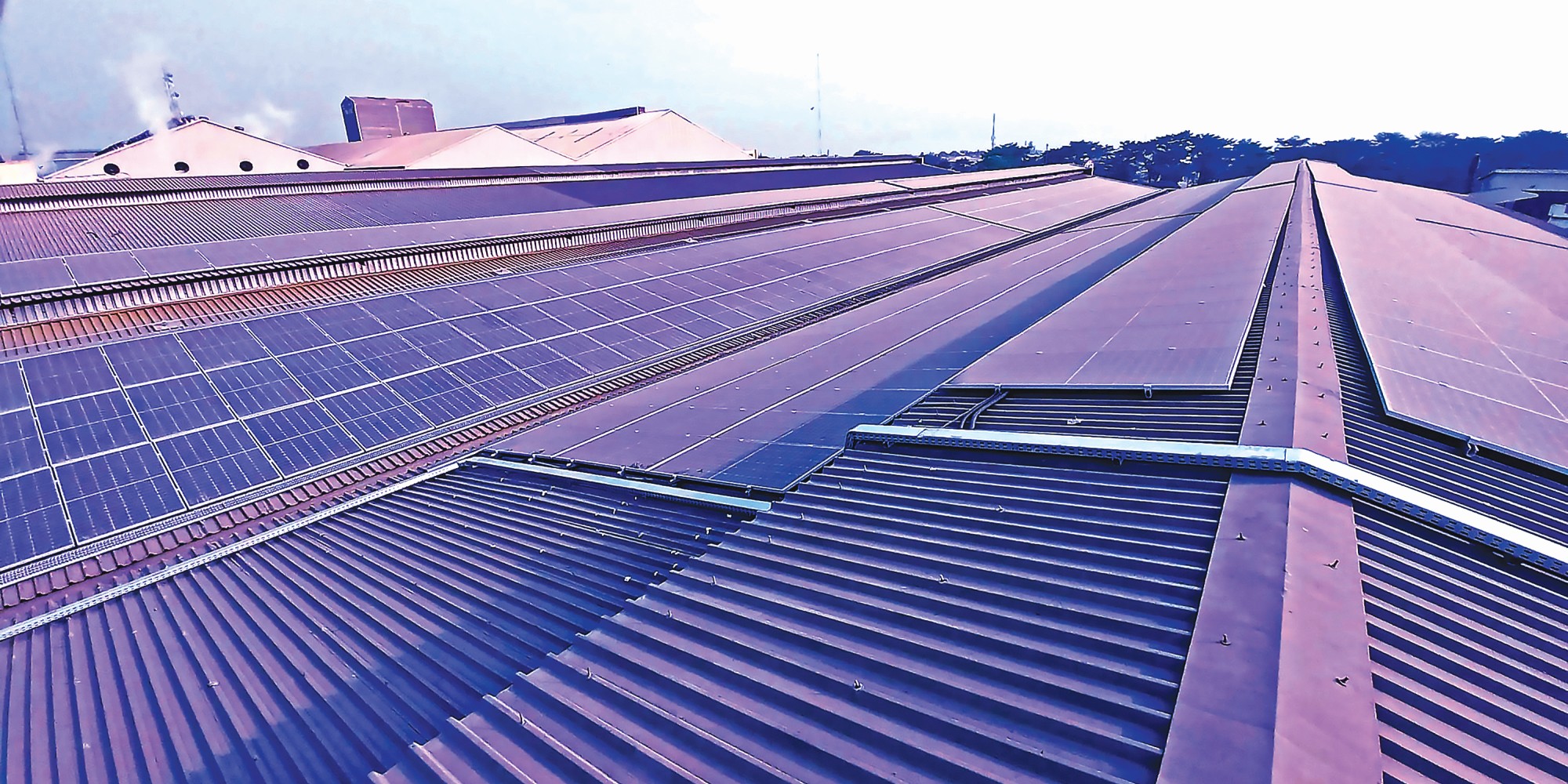
Supply:
- PowerCommand Microgrid Control® MGC900
- C900D5 generator
- C550D5 generator
- C350D5 generator
Cummins is committed to addressing environmental sustainability in both our facilities and our products while continuing to create world class power generation solutions. The recent installation of a microgrid at the new head office in Ikeja, Nigeria is an example of the exceptional solutions that Cummins can engineer, design, and integrate for a resilient and sustainable future.
Cummins is investing in renewable energy on a global level to reduce the carbon footprint of our facilities and our products.
Through the installation of this microgrid at Cummins’ head office in Lagos, Nigeria, Cummins is working towards its environmental goals of reducing absolute greenhouse gas emissions from its facilities and operations.
This approximately 1MW microgrid system generates 756 kilowatt peak (kWp) power from a solar array with 1,658 panels installed on the roofs of 3 different buildings at the facility. “Solar is going to play a major role in meeting our environmental goals,” said Mark Dhennin, Director of Energy and Environment for Cummins’ Facilities and Operations. “There has been significant technical improvements and price reductions that make it increasingly attractive as a low-carbon energy source.”
The microgrid system is fully monitored and controlled by a Cummins PowerCommand® Microgrid Controller (MGC900) that provides a single interface for monitoring and paralleling the entire microgrid system including eleven smart inverters, a 250KWh Lithium Ion (Li-Ion) battery bank, a battery charger, four irradiance sensors, a single utility source, and three diesel generators models – C900D5, C550D5 and C350D5 delivering 900 kVA, 550 kVA and 350 kVA in Standby with provision for a fourth gas generator model.
The advanced controller used in the microgrid balances the distributed energy sources to maximize the output of renewable power, reliably support the facility loads, and achieve the lowest total cost of ownership. The controller regulates the output power from inverters and the automatic starting/stopping of generators based on the load demand, as well as regulating charge/discharge rates of the Li-ion batteries to achieve the system goals of maximizing renewable power, increasing system resiliency, preserving the batteries life, and optimizing generator set fuel efficiency.
The MGC900 is configured to reduce the dependance on utility grid power during the daytime when renewable energy is abundant and utilize excess solar power stored in the batteries during grid absences. Generator sets are used when load exceeds the available power from solar and/or batteries or when grid outages are prolonged. Through this optimization, the Levelized Cost of Energy (LCOE), an important metric for understanding the true cost of energy from various available sources, and the system’s Total Cost of Ownership (TCO) are reduced. The combined microgrid system will reduce annual diesel consumption by 30% in addition to more than 30% direct savings on the facility’s utility bill.
The MGC900 provides detailed information for each asset within the system with intuitive touchscreen navigation in addition to an animated One-Line diagram specifically designed to represent the exact configuration of the project. The controller also provides complete real-time system information including system alarms, alarm history, and sequence of events recorder for fast issue resolution.
Additionally, the MGC900 displays historical trends and data to track the various assets’ usage and help in analyzing entire system’s performance. The regional and global teams of the Energy Management Solutions business collaborated to engineer the MGC900 to match the specific project’s needs as well as designing the communication network for overall microgrid system. Due to the distribution of the PV panels and inverters across three different buildings, fibre optic network was used instead of copper cables for the fastest communication speed over long distances while protecting the communication signals from electromagnetic interferences generated by the inverters.
The goal was to reduce the facility’s dependency on utility grid, lower operational running costs, and minimize the carbon footprint.
Cummins’ Global Energy Management team successfully commissioned all system components, including:
-
(11) Smart inverters with a total capacity of 756KW
-
Energy Storage System (ESS) with a capacity of 250KWh
-
Switchgear and power totalizing panels
-
The fiber optic communication network
-
Cummins diesel generators
-
The PowerCommand® Microgrid controller MGC900
Having the individual system components commissioned, the team conducted a series of integration tests to ensure the system was functioning as per design; the tests were also extended to cover various failure modes to ensure that the MGC900 will ensure availability of power even during extreme outages. These tests included:
-
ESS system charge/discharge sequences
-
Load sharing between the various power sources
-
Energy resource optimization to reach optimum load sharing percentages required to achieve the most economic running cost for the facility
-
Failure modes of utility, generators, and inverters, circuit breakers and communication
The final integration test of the system achieved a significant reduction in dependency on the utility source, with only 10% of the plant load (40KW) being consumed from the grid. The total plant consumption was 388 KW, with 90% of that power being generated by the PV and ESS systems. This resulted in a cost-effective and sustainable solution for the power plant.
The Microgrid system also resulted in the reduction of CO2 emissions, as the facility relied more on renewable energy sources. Additionally, the facility’s operating costs were lowered due to the reduction in dependency on the utility grid power
The system showcases Cummins’ capabilities in the market as a microgrid solutions provider while continuing Cummins’ commitment to reducing greenhouse gas emissions to address the threat of climate change. The Cummins microgrid controller can be used in a wide variety of customer applications to seamlessly integrate and optimize dissimilar energy sources to generate the best value to meet project needs.

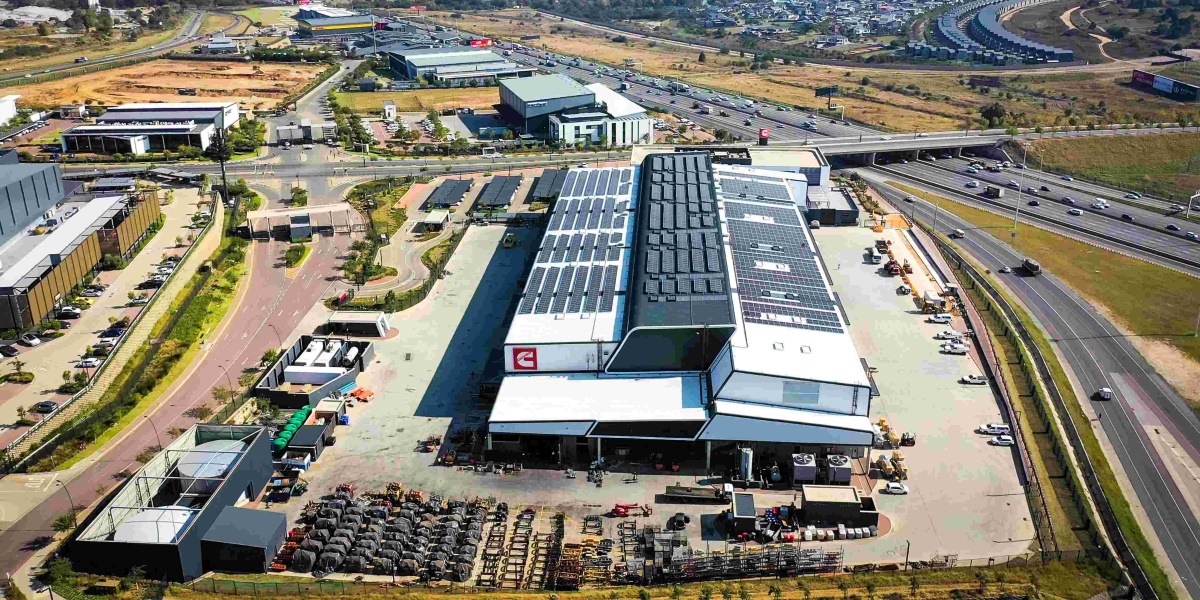
Overview Where: Johannesburg, South Africa Purpose: To reduce carbon emissions and take a significant step towards Cummins 2030 Environmental Social and Gover...
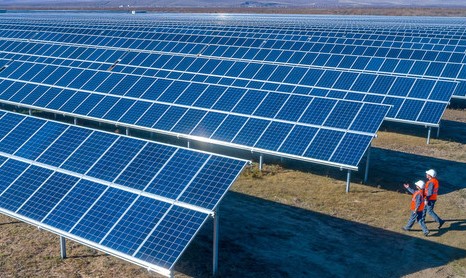
Overview Challenge: Provide power systems technologies for a completely off-grid microgrid solution that has the capacity ...

Overview Challenge: Provide power system technologies for a completely off-grid microgrid solution in a remote location bu...