Technology meets purpose
Key Points
- How BESS turns daytime solar into evening power for homes, schools, and councils
- How hybrid systems can cut diesel fuel use dramatically in remote and island communities
- Why data centers now look at BESS as part of core energy strategy, not just backup
Powering paradise comes with significant responsibilities.
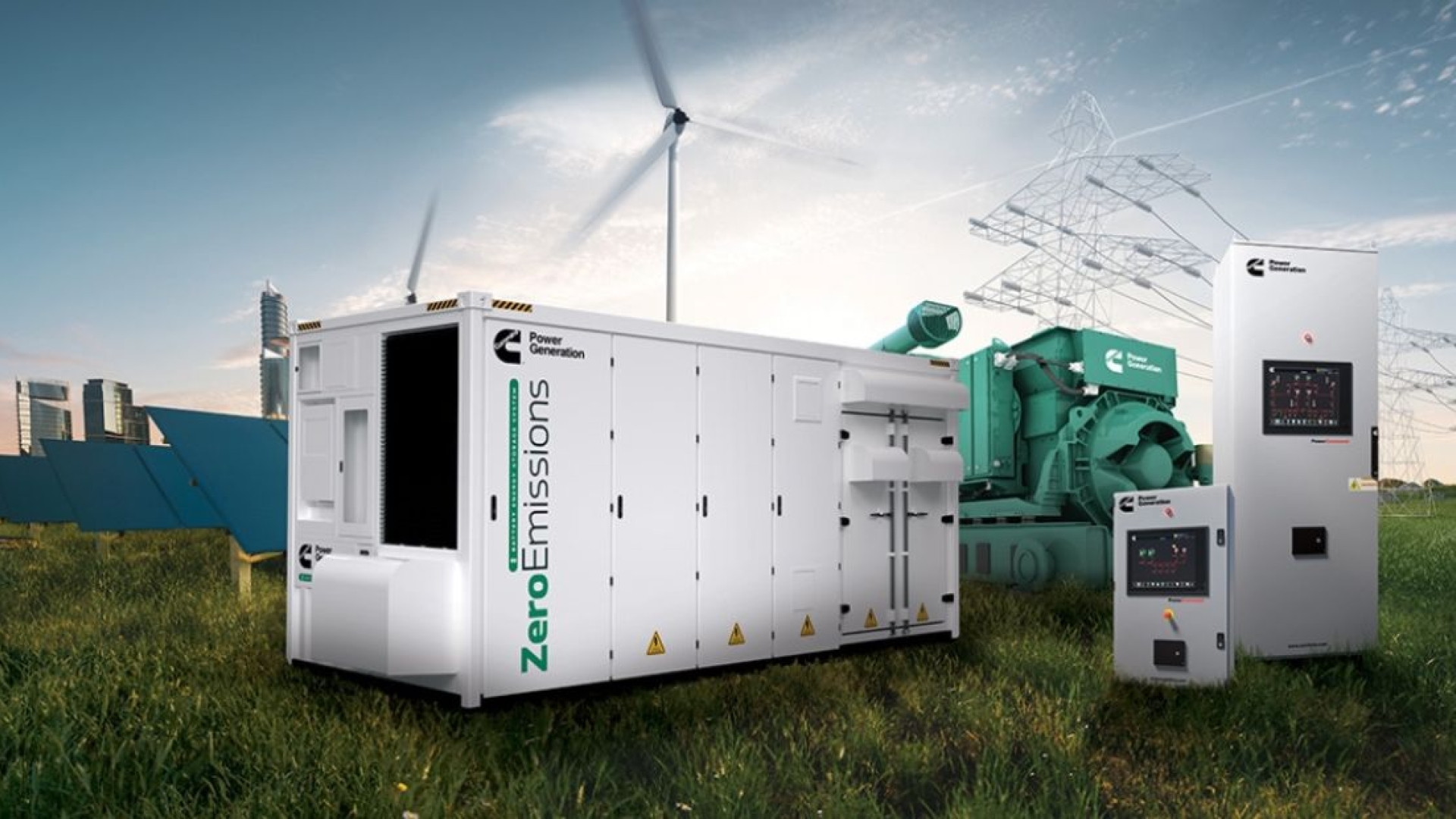
In this episode of Power Onward, Kim talks with Sherif about how battery energy storage systems (BESS) are changing the way Australia and the Asia Pacific region keep the lights on.
From rooftop solar in suburban neighborhoods to remote islands, luxury resorts, and fast-growing data centers, Sherif shares how smarter storage is making energy cleaner, more reliable, and more cost-effective.
Watch
Additional Resources
- Cummins Microgrids
- Cummins BESS webpage
- Why battery storage is now essential to microgrid development
- Key tips to help understand battery energy storage systems
- Power Onward podcast: Beyond your average household battery
- What are battery energy storage systems?
- How BESS is driving grid stability, supporting renewables, and accelerating the Middle East region’s clean energy goals
Timestamps
(00:00) This is Power Onward
(01:22) How BESS shows up across APAC
(02:33) Energy shifting 101
(04:04) Pairing diesel, solar, and BESS to cut fuel use in remote locations
(05:01) A Pacific Island project that unlocks energy independence and steadier power
(05:53) How islands are using renewable microgrids as a differentiator
(07:06) Data centers, AI, and why batteries now support the digital world
(08:16) Where BESS is headed next in APAC
(08:54) The human impact behind the tech
Listen
Apple Podcasts | Spotify | Amazon Music
Transcript
Episode transcript
Kim (00:00:33):
You are sitting on a beach and the sound of waves are gently crashing. A warm breeze is in the air, and the feeling of total relaxation is upon you. It's the perfect vacation, right? Here's something you might not think about while you're soaking up the sun: How is all of this powered in places like the Maldives?
With over a thousand islands, each island relies on its own microgrid, keeping everything running smoothly from the lights in your resort to the air conditioning in your room. All of it depends on the energy solutions that are shaping the way we think about power. Today we're diving into how these innovations are pushing the boundaries of what's possible in the energy transition.
And the big question is, how do we power the world's growing demand for energy without tipping the scales on our planet?
Hi, I'm Kim.
Sherif (00:01:22):
I’m Sherif.
Kim (00:01:24):
Hi Sherif. Let's talk a little bit more about the energy transition where you are. So tell us—where are you based, and how does power generation come to life in your region?
Sherif (00:01:33):
First of all, thank you, Kim, for having me. I'm based in Melbourne, Australia. Across Australia and the Asia Pacific region, we are seeing battery energy storage systems making a real difference. It reduces reliance on fossil fuels, supports renewable integration, improves network resiliency, and helps save costs. Across Asia Pacific, we see applications like peak shaving, demand response, load management, backup power, and EV charging, and they are all transforming how energy is managed.
Kim (00:02:05):
That is so much—when you hear battery energy storage, sometimes you think of just storage, but there are so many more utilities to this product. Earlier in the season when I talked to Aaron Gold, it was like an introduction to BESS, and I was learning a little bit more. We were all just in awe of how impactful it can be. But you're already seeing BESS in action in your region, which is amazing. So tell us some of those common applications of BESS in Asia Pacific.
Sherif (00:02:33):
Yeah, across Australia and Asia Pacific, battery energy storage systems are used in many ways, but in commercial and industrial applications, three applications truly stand out: renewable energy shifting, off-grid and hybrid applications, and peak shaving.
Kim (00:02:49):
Do you mind if we dig into each of these a little bit deeper, starting with renewable energy shifting?
Sherif (00:02:54):
Shifting is about optimizing renewable energy resources. Australia has one of the highest rooftop solar penetrations globally. During the day, we often produce more energy than we can use, but in the evening, when demand peaks, the sun has already set. BESS captures that excess solar energy and releases it later, cutting down grid demand, lowering bills, and easing pressure on the network. It’s like having a time machine for energy—store it when it is cheap and clean and use it when it is expensive and critical. We are seeing this across houses, commercial buildings, schools, and regional councils. Everyone is looking for smarter ways to manage their energy profile.
Kim (00:03:38):
I really like the analogy of a time machine because storing it and distributing it when it's needed most is so integral. And the applications are things we sometimes take for granted—commercial buildings, universities, schools, councils. There are a lot of great applications for BESS.
Very brilliant. I think you had mentioned something about off-grid and remote applications as well as peak shaving. Can we dig into those?
Sherif (00:04:03):
Across Asia Pacific, diesel has long been the go-to power source because of its reliability, but it's also expensive and carbon-intensive. By combining BESS with renewables and gensets, we can hybridize those systems. That means running generator sets less often—sometimes cutting fuel consumption by 30 to 50%. It's not just the environmental benefits; it's also about operational efficiency. When fuel trucks have to drive hundreds of kilometers into remote areas, every liter saved matters, and our customers are realizing that sustainability can lower their total cost of ownership.
Kim (00:04:42):
I really like that note—it’s not just about environmental benefit, though that is massive. It's also about operational efficiencies, which really help our customers understand the importance of these products and how it impacts their bottom line. Earlier you touched on remote communities, and I feel like this is something near and dear to your heart, isn't it?
Sherif (00:05:01):
It truly is. Many communities still depend on small diesel stations and face frequent outages. BESS gives them energy independence—steady power for schools, clinics, and local businesses. One example that stays with me, Kim, is a Pacific Island project I'm working on where integrating solar and BESS can cut diesel usage by 40%. The impact is not just on emissions—it changes daily life. Lights stay on at night. Clinics and hospitals will have uninterrupted power. That's when technology meets our purpose.
Kim (00:05:37):
Very strong—technology meeting purpose. And when you get down to it, that is the purpose: to serve us in ways that make our lives more convenient.
So Sherif, what about Fiji or the Maldives, where these resorts heavily rely on diesel for 24/7 applications?
Sherif (00:05:53):
That's a great point. Resorts and island destinations have a unique challenge. They need uninterrupted power for guest comfort, but they are also operating in very delicate environments where sustainability is part of their plan. BESS is becoming a game-changer here. By integrating solar with existing diesel systems, resorts can cut diesel usage dramatically while keeping operations seamless. It's clean, quiet, and reduces the environmental footprint—something visitors care about. Some resorts are now advertising their renewable microgrids as part of their guest experience. This proves that sustainability can also be a differentiator.
Kim (00:06:35):
That is amazing. Also—what a flex to be able to say, “We have our own personal microgrid on our resort.” Something we don't realize is that reliable technology can lead to luxury, especially when we're talking about vacations and resorts.
So we've discussed remote communities and touristic islands. Let's switch gears for a moment, because a recurring theme this season has been how Cummins is deeply ingrained in the AI expansion and digital transformation. What products are you seeing making an impact in this space?
Sherif (00:07:06):
Absolutely. In fact, that's one of the fastest-growing segments. Data centers are now the heartbeat of the digital world—from streaming to cloud computing to artificial intelligence. They demand both reliable and sustainable energy. BESS plays a revolutionary role here. It acts as a backup and grid support system by supplying power quality, managing peaks, and even allowing data centers to participate in demand response markets.
Data centers already trust our gensets, and they’re asking to pair the same dependability with our clean, silent, and fast-responding energy storage units. It's not just backup power anymore—it’s becoming a core part of energy strategy for critical facilities. And for Cummins, it is exciting to help shape that transition from conventional backup power to integrated, low-emission systems that keep digital infrastructure running.
Kim (00:08:07):
So Sherif, we've got energy shift, diesel savings, remote empowerment, power independence. Where do you see this going in APAC next?
Sherif (00:08:16):
We are moving from demonstration to deployment—and we are moving fast. Over the next five years, I think BESS will become as essential as generators once were. In Australia, that means energy independence and decarbonization hand in hand. Across Asia Pacific, it means resilience—the ability to keep lights on through storms, distance, or demand peaks. And for Cummins, it's about using our heritage of power reliability to shape the clean energy era.
Kim (00:08:47):
Before we wrap, I'd love to know what you find most rewarding about working in this industry. You've been in Power Generation for so long.
Sherif (00:08:54):
Honestly, it's seeing the change firsthand—when a site that used to rely purely on diesel switches to hybrid power, or when a community realizes that they can control their own energy future. It's those moments. It's not about technology—it’s about people. You can see pride, independence, hope. And that's what keeps me excited about what we do at Cummins.
Kim (00:09:18):
Well, there you have it. From sunny beaches to bustling data centers, one thing is clear for us, and that's the energy transition and how it's making waves. Sherif, thank you so much for taking time out of your evening to share some insights on how power generation is evolving in APAC.
Sherif (00:09:33):
Thank you so much, Kim.
Kim (00:09:35):
Alright, so what's the big idea for this episode? Remote islands, luxury resorts, and data centers all have one thing in common: they depend on innovative energy solutions to keep everything running smoothly. As Sherif shared with us, microgrids, solar, and battery storage aren't just about providing power where it's needed most—they're pushing the energy transition forward, making sustainability and reliability work hand in hand.
The big idea: We have to build the future of energy in a way that protects our planet. And the more we embrace innovative technologies, the closer we get to a world where we can power everything we need without compromising the future.
For more episodes, check out cummins.com/podcast. Want to join us on our mission towards smarter, cleaner power? Check out cummins.com/careers to explore opportunities.
Author Profiles